Vietnamese rice faces difficulties in China: Self-reflection comes first!
Post Date: 23/07/2019Instead of remaining comfortable with its role as an easy-going rice importer, China is cutting back on rice imports and is not hiding its ambition to become an exporter.
Vietnamese rice has been going through difficult months. Data from the General Department of Vietnam Customs show that Vietnam’s rice exports to China declined sharply: in the first five months of 2019, export volume fell by 75.4% and export value dropped by 75.2% year-on-year, to 223,078 tons, equivalent to USD 111.33 million, accounting for nearly 8.1% of total export volume and 9.4% of total export value.
Export prices to this market also decreased by 6.3%, to USD 499 per ton. China, once Vietnam’s largest rice export market, fell to third place in the first five months of the year. For the whole of 2019, China granted an import quota of 5.32 million tons of rice but was forecast to import only about 3.5 million tons. The severe decline in this largest import market not only poses challenges to this year’s rice export performance but also forces us to face some harsh realities.
The saying “blame ourselves first before blaming others” applies perfectly in this case. Warnings that China would tighten controls on rice imports from Vietnam and other ASEAN countries from 2019 had appeared long ago.
We had ample time to prepare to meet requirements such as fumigation duration of 120 hours; inspection samples being sent to Chinese facilities for testing; packaging and labeling fully stating origin information in line with international practice and bearing certification stamps from Chinese inspection authorities…
We were also not short of options to obtain additional rice export licenses to China or to form linkages, build more factories, or increase capacity so that licensed exporters could take on additional volumes, compensating for enterprises unable to export under entrustment as in previous years. China is becoming more demanding, while Vietnamese enterprises remain overly lenient with themselves.
Notably, the outlook is becoming increasingly difficult. According to the U.S. Department of Agriculture (USDA), China’s rice reserves in the 2019/2020 crop year were estimated at 114–116 million tons, accounting for nearly 70% of global rice stocks. Over the past two years, China auctioned more than 7 million tons of reserve rice, including 1.5 million tons in May 2019 alone.
Another noteworthy figure from China Customs shows that China’s rice exports in the first four months of 2019 reached nearly 830,000 tons, up 112.4% year-on-year, approaching its rice import volume. Clearly, rather than staying comfortable as an easy-going rice importer, China is reducing imports and even openly aspiring to become an exporter. With this trend, a decline in rice imports into the Chinese market is inevitable.
For Vietnam, China’s rice development policy brings a double disadvantage. As China also opts for low-priced rice production, Vietnamese rice—whose main advantage has been low price—faces direct competition from domestic Chinese rice in the Chinese market. It is no coincidence that Vietnamese rice has been the most strongly and clearly affected by the Chinese market.
Moreover, Chinese rice will become a formidable competitor to Vietnam’s low-price export strategy. Since 2017, Chinese rice has continued to expand its market share in Africa and the Mediterranean, while striving to enter other arenas such as Asia and the Americas. According to USDA forecasts, by 2020 China would become the world’s fifth-largest rice exporter, surpassing the United States.
Pressure on Vietnamese rice also comes from another troubling reality. In 2014, public opinion was stirred by information that Vietnam imported up to 70% of its rice seed from China. Later, the Department of Crop Production clarified that Vietnam imported only about 65–70% of hybrid rice seeds. This situation does not seem to have improved much, as statistics from 2016 show that Vietnam still imported 7,000 tons of hybrid rice seeds, mainly from China. As for fertilizers and plant protection chemicals, China is Vietnam’s largest supplier, meeting nearly 50% of market demand. This dependence further undermines the competitiveness of Vietnamese rice if it continues to follow the low-price path that China is pursuing.
Clearly, change is needed, toward multiple goals: retaining the 1.4-billion-population Chinese market and expanding markets for Vietnamese rice. This means improving the quality and brand value of Vietnamese rice on a broad scale, rather than relying on the isolated efforts of a few private enterprises. So what should be done?
One proposal during these difficult months with the Chinese market is for management agencies to provide better information and guidance so domestic enterprises can adjust their production and business activities. What enterprises expect is not merely announcement-style communications, but more in-depth analyses of market fluctuations, new demand trends, comparative advantages of Vietnamese rice to avoid losing traditional market share and to capture new ones, new regulations and how to comply through linkages, priority policies of management authorities, and ways to access support and assistance.
Similarly in other markets, the role of trade and investment promotion should not stop at selling what we currently produce with ease, but should move toward promoting what Vietnamese enterprises are capable of doing. This implies a flexible adjustment between a strategy of exporting large volumes of low-priced rice and selling higher-quality, higher-value rice to the world.
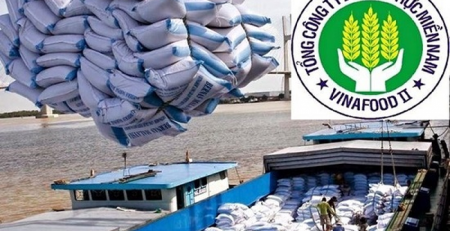
Under this approach, the first task is to rectify the organization of rice exports. For years, rice exports have relied on government contracts and have been managed and allocated by the Vietnam Food Association (VFA) to its members. Large state-owned enterprises—Vinafood 1 and Vinafood 2—often hold leadership positions within the Association, making it easier for contracts to go to these enterprises.
Statistics from 2008 show that the top 10 exporters accounted for 70% of Vietnam’s total rice exports, with Vinafood 2 and Vinafood 1 alone accounting for about 40%. These two enterprises focus primarily on exporting large volumes of low-priced rice, stifling opportunities and incentives for farmers to produce high-quality rice. As a result, after each harvest, one still hears complaints that an entire rice season yields barely enough money to buy a rice cooker.
We have spoken far too much about the aspiration that farmers can make a living from rice, yet have taken too few practical actions to turn that aspiration into reality. Rice farmers continue to wait patiently…
http://baodatviet.vn/kinh-te/thi-truong/gao-viet-gap-kho-o-trung-quoc-tien-trach-ky-3383673/