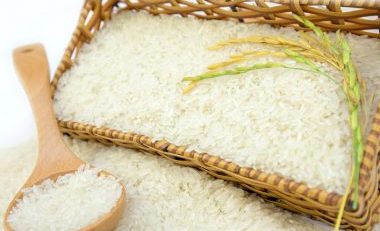
Rice Exports – Seeking New Markets
Post Date: 23/07/2019In the first half of 2019, China, Indonesia, and Bangladesh—three major rice import markets—all reduced their import volumes. Many experts worried that this situation could continue until the end of the year, causing rice exports from the world’s three leading exporters—India, Thailand, and Vietnam—to remain sluggish.
However, thanks to the dynamism of enterprises (DNs), Vietnam’s rice export activities have shown positive changes.
Shifting market structure
Data from the General Department of Vietnam Customs show that in the first five months of 2019, enterprises exported 2.76 million tons of rice, equivalent to USD 1.18 billion. Compared with the same period in 2018, this represented a decrease of 6.3% in volume and 20.4% in value. Mr. Phan Văn Chinh, Director General of the Import–Export Department (Ministry of Industry and Trade), said that Vietnam’s rice exports during this period faced many disadvantages due to the lack of large-volume centralized contracts to drive the market.
Traditional medium-to-large markets for Vietnamese rice simultaneously reduced their import volumes for various reasons. China had very large inventories and also returned to competing with other rice-exporting countries (including Vietnam) by exporting old rice to African countries. Indonesia’s market was sluggish during the election season, while Bangladesh restored production after flooding.
Therefore, the market was forecast to remain gloomy throughout 2019. This continued to put pressure on the consumption of rice from the Summer–Autumn crop of 2019.
However, the Ministry of Industry and Trade also noted that many enterprises were quick to grasp changes in the Philippine government’s rice import policy. Thanks to expanding into this market, although Vietnam’s rice export volume declined, the decrease was not as sharp as in some other countries.
The early months of the year also recorded shifts in market structure, export rice varieties, as well as efforts by Vietnamese rice exporters to seek and expand new markets.
Vietnamese rice has been strongly exported to Africa, Europe, the Americas, and the Middle East. In 2019, Iraq was forecast to import Vietnamese rice at a stable level of around 300,000 tons. Many African countries sharply increased imports of Vietnamese fragrant rice in early 2019, such as Côte d’Ivoire, Ghana, South Africa, Mozambique, and Angola.
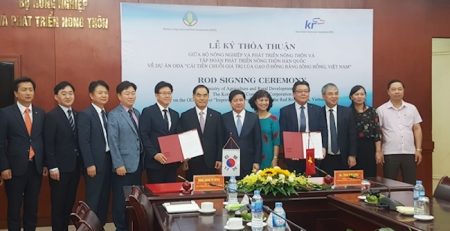
In addition, enterprises can take advantage of rice preferences in countries that have signed free trade agreements with Vietnam, as well as bilateral agreements such as the quota of 10,000 tons per year with a 0% tariff for the Eurasian Economic Union (EAEU) market. Vietnam has also just concluded negotiations with South Korea on a rice export quota to this market at favorable prices. The signing of the EVFTA Free Trade Agreement between Vietnam and the European Union creates more opportunities for Vietnamese rice to penetrate this market in the near future.
Adjusting cultivated area and cropping calendar
According to Mr. Lê Minh Đức, Director of the Department of Industry and Trade of Long An Province, the current difficulty in rice exports and domestic rice consumption is that supply exceeds demand. The forecast demand for Vietnamese rice imports is about 5 million tons, while domestic production capacity reaches 7 million tons. Therefore, the Ministry of Agriculture and Rural Development and local authorities must work together to calculate an appropriate level of rice production.
Should rice-growing land be maintained at 3.8 million ha or reduced to 2.5 million ha? At the same time, cropping calendars also need to be reconsidered. Previously, simultaneous sowing was used to limit pests and diseases; now, cropping schedules should be arranged more reasonably to suit market demand. If sowing is done simultaneously, it will create pressure on storage facilities, drying plants, and logistics.
Mr. Phạm Thiện Nghĩa, Vice Chairman of the Đồng Tháp Provincial People’s Committee, raised the issue of whether rice should remain a national export strategy, given that export turnover is lower than that of seafood and fruits and vegetables. Many localities have already shifted from rice cultivation to aquaculture and fruit tree farming.
According to Deputy Minister of Industry and Trade Trần Quốc Khánh, in the context of unfavorable market developments, enterprises need to work alongside the State to overcome difficulties. In the short term, the Ministry of Industry and Trade is developing stabilizing mechanisms to facilitate enterprises’ purchase of rice from farmers. At the same time, ministries need to coordinate in updating market information to provide enterprises with an overall view and help them grasp market trends.
The Ministry of Industry and Trade and the Ministry of Agriculture and Rural Development will coordinate to propose specific mechanisms for the development of the rice sector and will report to the Government to issue appropriate development policies. Enterprises need to cooperate with the Vietnam Food Association (VFA) to build branding, packaging, and labeling. At the same time, each enterprise must control product quality, maintain credibility, avoid contract breaches that could damage the Vietnamese rice brand, and enhance management capacity to seek new markets.
http://saigondautu.com.vn/kinh-te/xuat-khau-gao-tim-thi-truong-moi-70070.html